Galungan and Kuningan in Bali : Meaning, Traditions, and Celebration
Every six months, the atmosphere in Bali transforms into something more sacred, warm, and full of happiness. Hindus across the Island of the Gods prepare to welcome two major celebrations: Galungan and Kuningan. These two sacred moments are not merely religious traditions but spiritual celebrations that remind humanity of the importance of balance between dharma (goodness) and adharma (evil). This celebration is not only a source of pride for Hindus but also a captivating cultural attraction for tourists from around the world.
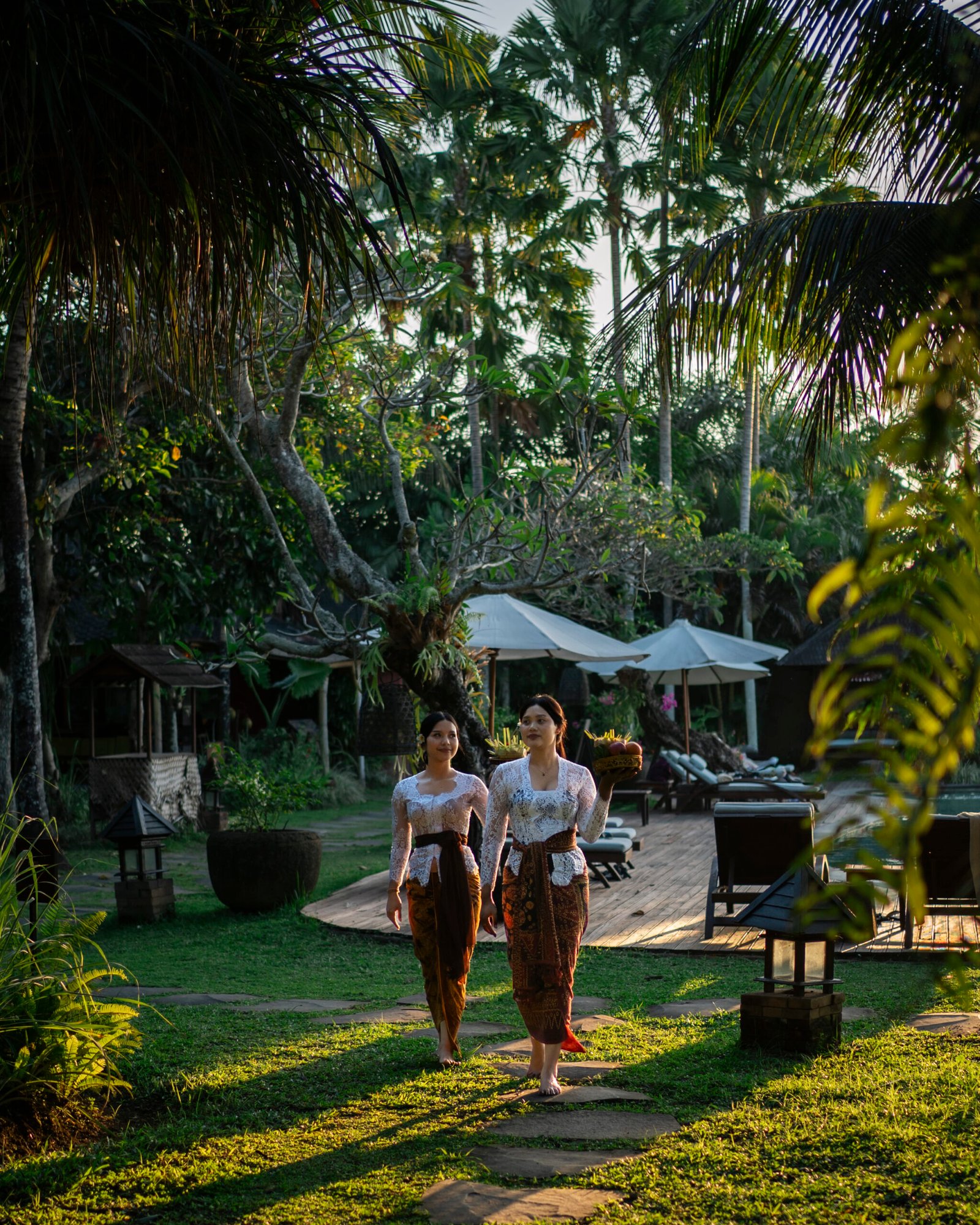
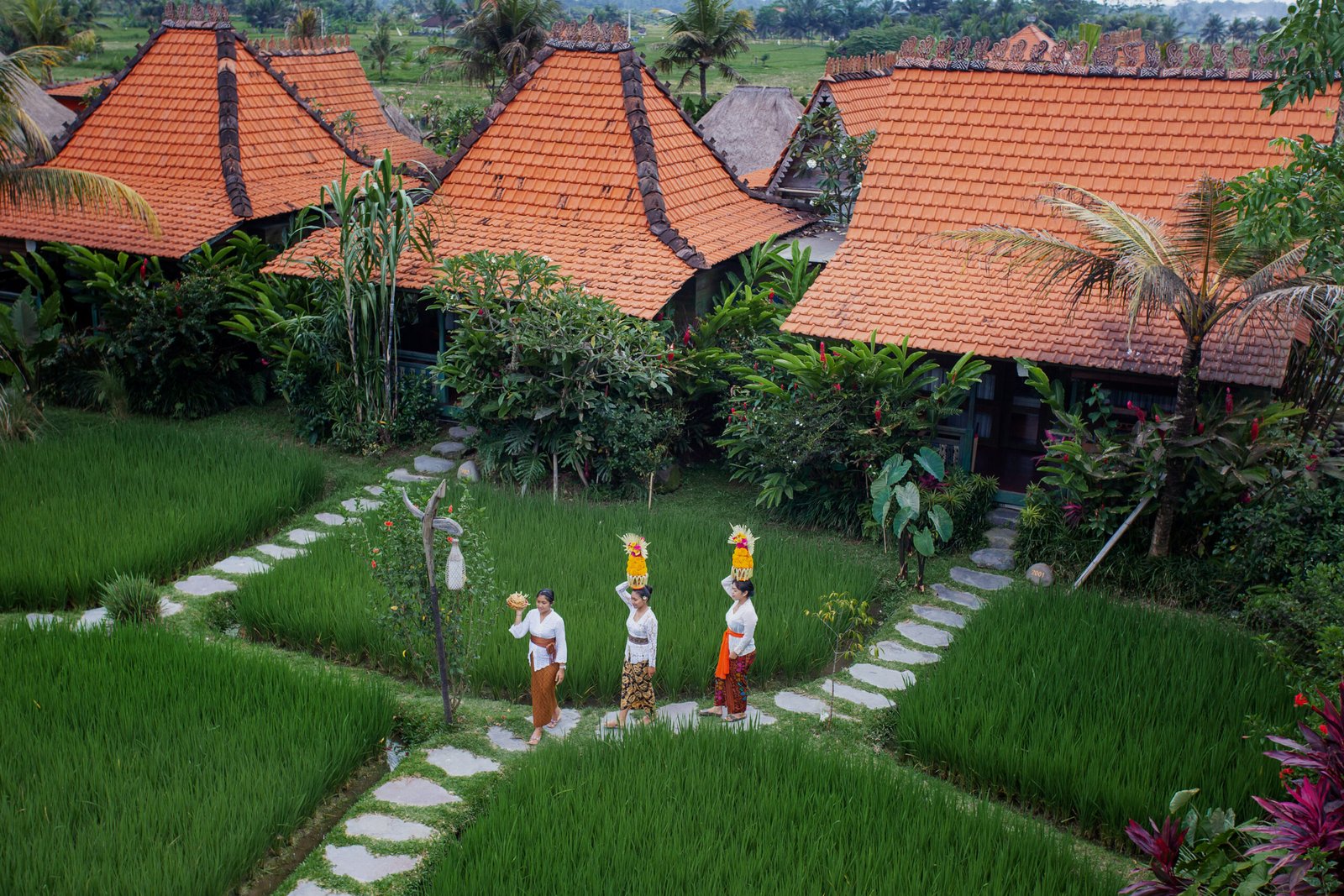
In the sacred and peaceful atmosphere of Galungan and Kuningan, properties under Aryas Hotel such as Aryaswara Villa Ubud, Arya Villas Ubud, and Arya Arkananta Resort & Spa become the best places to truly experience the harmony of Bali. Located amidst lush tropical nature, these properties offer a perfect balance between modern comfort and the warmth of Balinese culture. Every corner of these properties is designed to bring tranquility, accompanied by the greenery of natural and lush trees.
When Galungan and Kuningan arrive, the atmosphere at Aryas Hotel properties like Aryaswara Villa Ubud, Arya Villas Ubud, and Arya Arkananta Resort & Spa feels even more alive. Guests can witness penjor lining the roads leading to the properties, hear soft gamelan in the distance, and feel the spiritual energy that fills the Balinese air. Aryaswara Villa Ubud, Arya Villas Ubud, and Arya Arkananta Resort & Spa are not just places to stay they are spaces to reflect, give thanks, and rediscover the meaning of life balance. Galungan and Kuningan are not merely about rituals but about a spiritual journey toward true peace. Both teach humanity to always side with truth, maintain balance in every step, and respect the universe with love. For those of you who wish to experience Bali on a deeper level not just as a tourist destination but as a space to unite with tranquility Aryaswara Villa Ubud, Arya Villas Ubud, and Arya Arkananta Resort & Spa await you to enjoy the peace, culture, and beauty of the Island of the Gods in one perfect harmony.
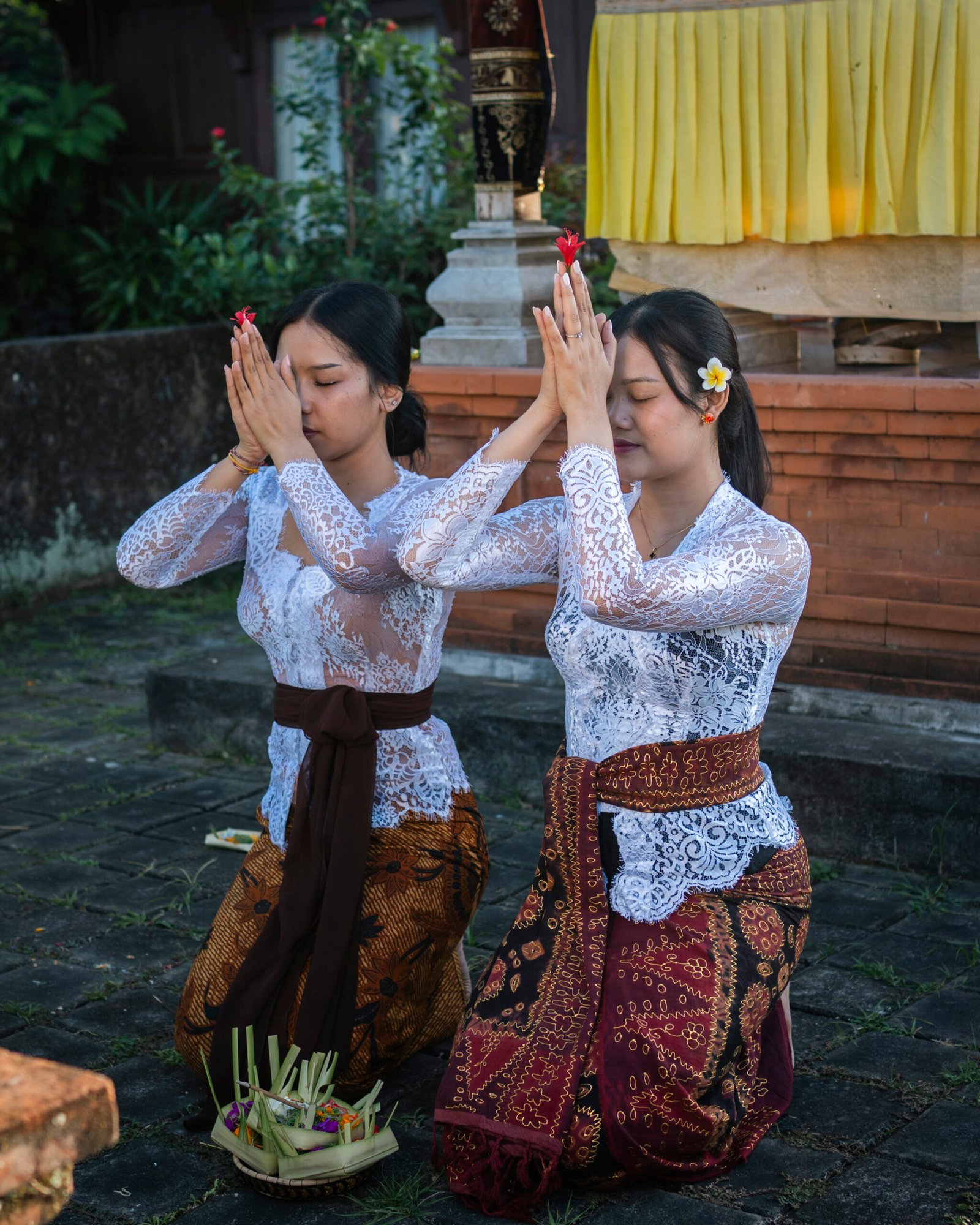
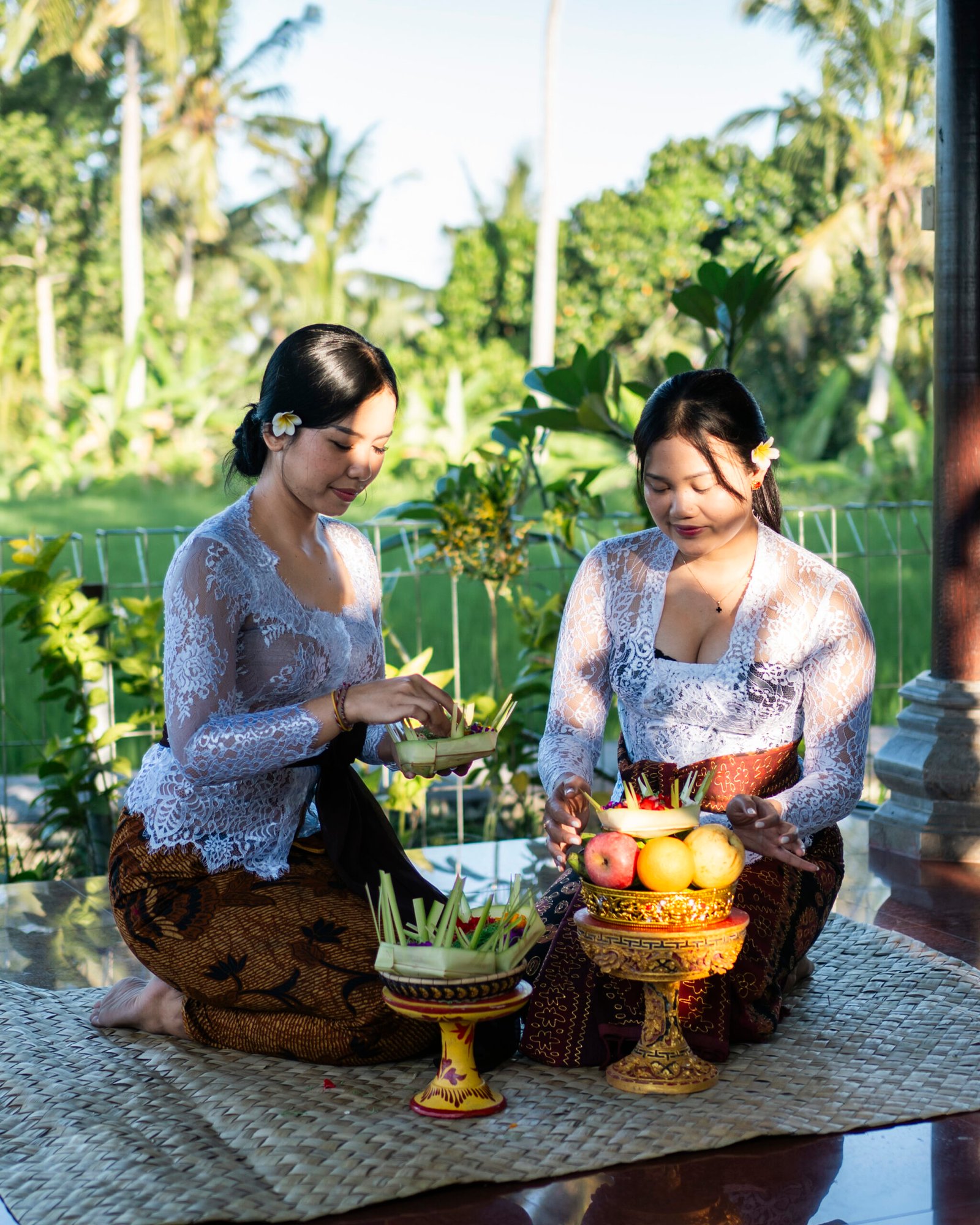
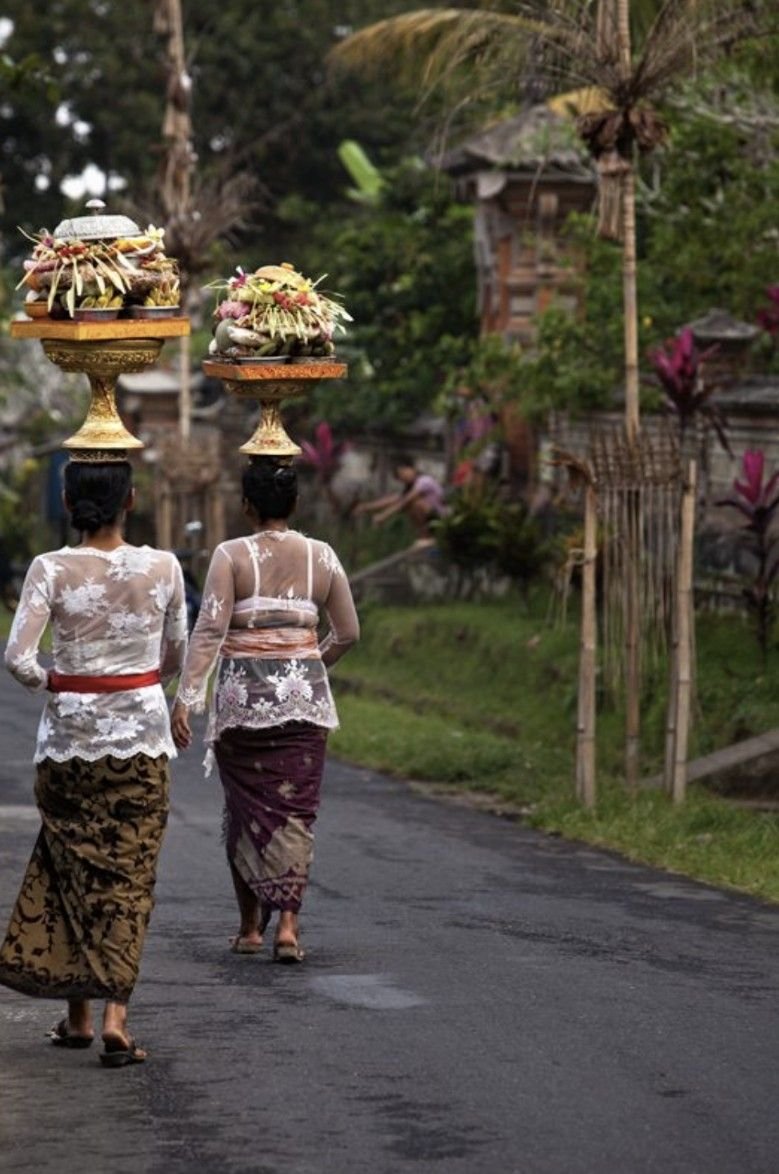
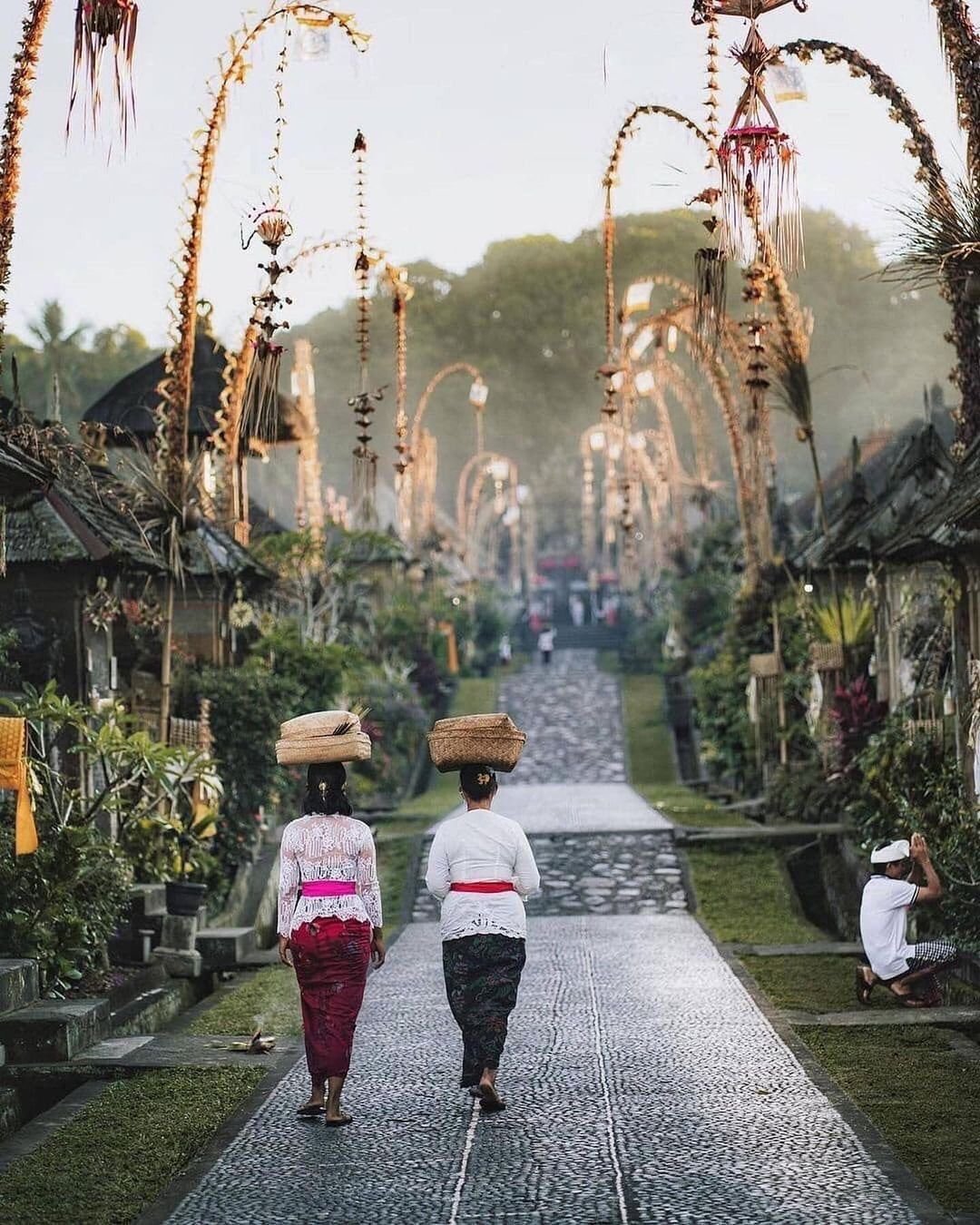
For anyone in Bali, the atmosphere of Galungan and Kuningan always leaves a deep impression. From early morning, the scent of incense and flowers fills the air, the sound of gamelan drifts from the temples, and people dressed in white and yellow traditional attire head to sacred places to pray. Every house is decorated with penjor swaying in the wind, bringing a sense of peace and sanctity. Children laugh as they help their parents prepare the offerings, while women make canang sari with full sincerity. This is a calming and touching sight — a portrait of Bali full of love and togetherness. For tourists, this is the best moment to witness Balinese spirituality alive, not as a spectacle, but as an inner experience that touches the heart. Behind the liveliness, there is a beautiful stillness that brings a sense of peace as if time moves slower and every breath feels meaningful.
THE MEANING OF GALUNGAN AND KUNINGAN
According to Hindu Dharma teachings, Galungan originates from the concept of Dharma Yudha, the victory of dharma over adharma. A classic story in Balinese lontar mentions that in the past, there was a king named Mayadenawa, an arrogant figure who rejected the presence of the gods. Eventually, he was defeated by Lord Indra, and from that victory came the meaning of Galungan as a symbol of the triumph of truth over evil. Meanwhile, Kuningan, celebrated ten days after Galungan, comes from the word “kuning” (yellow), which means the light of wisdom. Kuningan teaches humanity to always remember their origins, maintain a relationship with their ancestors, and live in spiritual awareness full of gratitude. These two celebrations complement each other — Galungan as the beginning of victory and Kuningan as the perfection through gratitude.
In the view of Balinese society, these two sacred days are not just rituals but humanity’s spiritual journey to return to true balance. Galungan is celebrated every 210 days based on the Balinese Pawukon calendar, falling on Wednesday Kliwon Dungulan. Its main meaning is the victory of dharma over adharma, signifying that truth and virtue will always defeat evil. On this day, Hindus believe that ancestral spirits (pitara) descend to earth to be blessed and hosted by their families through various ceremonies and offerings. Galungan is also a momentum to strengthen faith, balance the mind, and cleanse the soul of negative things that can disrupt life’s harmony.
THE MEANING OF PENJOR AS A SYMBOL
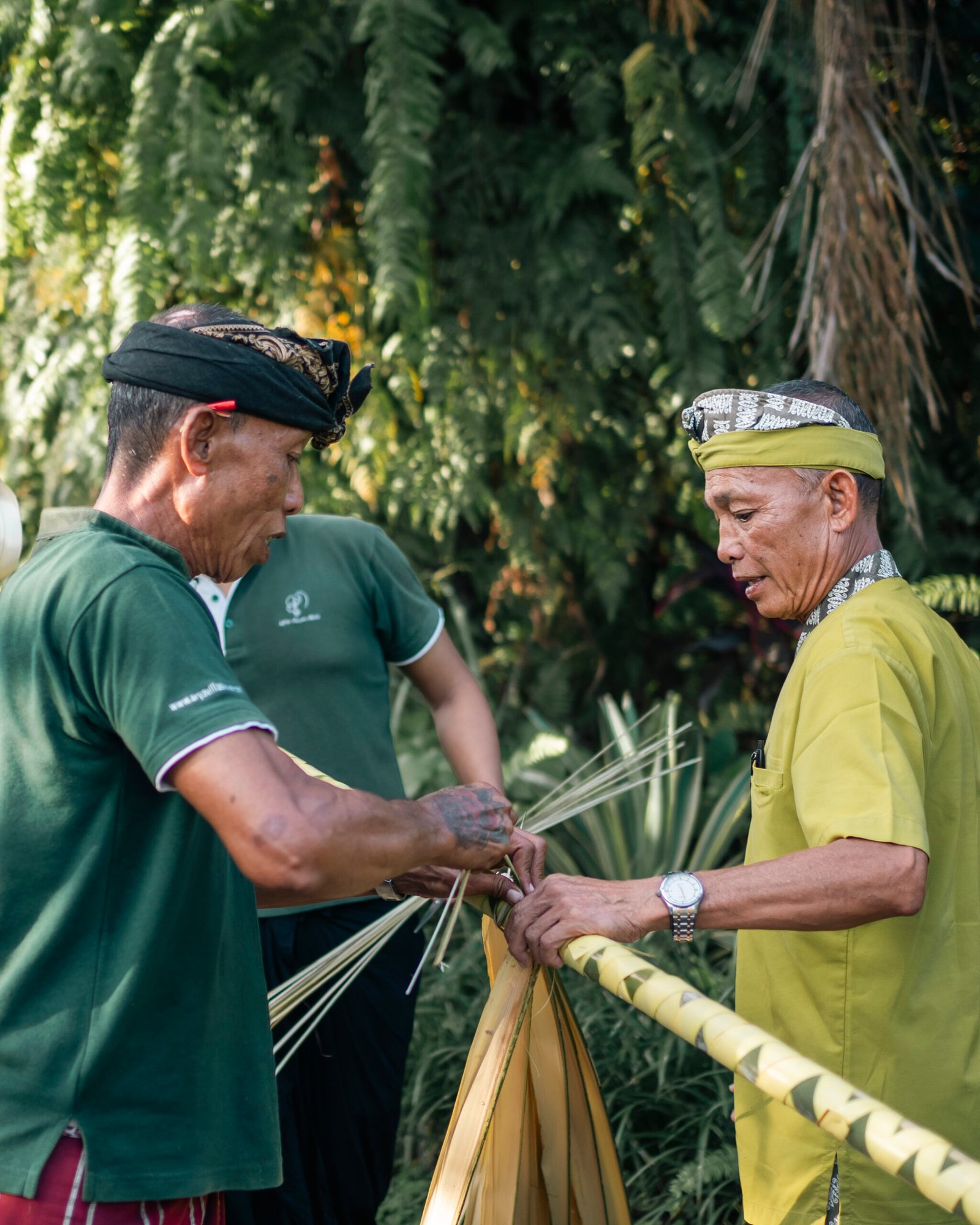
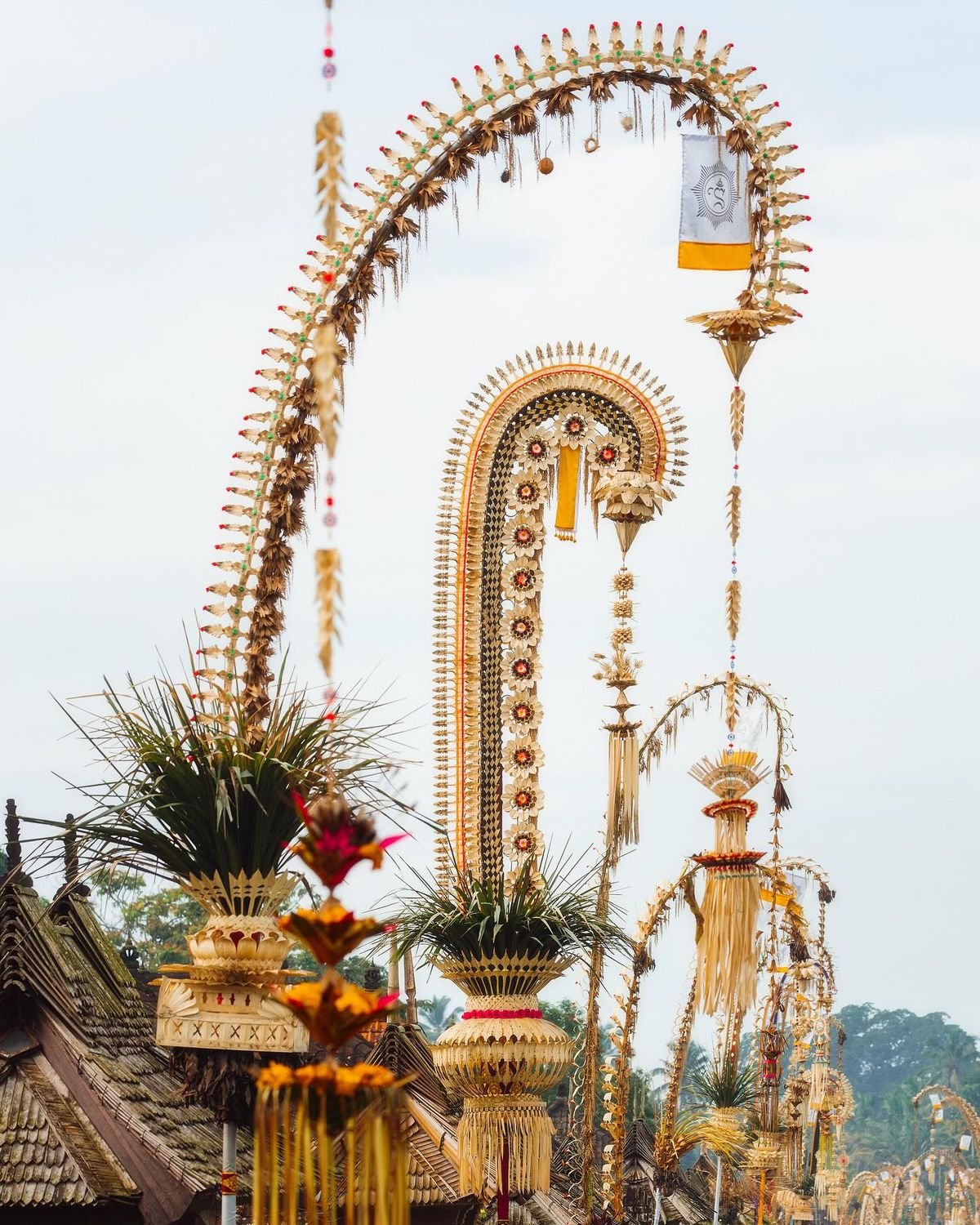
During Galungan and Kuningan, every house, temple, and street in Bali comes alive, filled with penjor standing gracefully in front of every Hindu household. For Balinese Hindus, the penjor symbolizes a sacred mountain. The penjor is installed precisely on Penampahan Galungan, after 12 noon. This signifies that on Penampahan Galungan, as humans, we wage war against impure thoughts, negative traits, and ego. After successfully winning the battle against these thoughts and traits, the penjor is installed as a symbol of “victory.”
As the main symbol, the Penjor represents Mount Agung, the abode of the gods. The penjor is made from a tall bamboo pole decorated with janur (young coconut leaves), rice, coconuts, fruits, and other items, depicting prosperity, devotion, and gratitude to God. Balinese Hindus believe that Mount Agung is the abode of Hyang Bathara Putra Jaya along with the gods and ancestors. Thus, the mountain is God’s palace with all His manifestations. The penjor becomes a symbol of gratitude and thanks for the harvest bestowed by Him, with Mount Agung as the giver of prosperity. It is recorded in the lontar Jayakasunu that the penjor symbolizes Mount Agung. Furthermore, in the lontar Basuki Stawa, it is mentioned that the mountain (giri) is the serpent king, none other than Naga Basuki.
In mythology, the base of Mount Agung is known as the abode of Sang Hyang Naga Basuki. From the word Basuki comes the name Besakih. Naga Basuki, in Basuki Stawa, is depicted with its tail at the mountain’s peak and its head in the ocean, symbolizing that the mountain is a water reservoir that then becomes rivers, eventually flowing into the sea. Thus, the mythology of the penjor, decorated elaborately for Balinese Hindu religious or traditional ceremonies, symbolizes a serpent. The sanggah (offering platform) placed on the bamboo penjor using coconut midribs symbolizes the neck and head of Naga Taksaka (with a coconut hung above the sanggah to place offerings). Then, the gembrong made from janur wrapped near the coconut represents the serpent’s hair. The sampian penjor with its curved tip hanging from the highest end of the bamboo represents the tail of Naga Basuki (the mountain symbol). The decorations attached along the bamboo from bottom to top, consisting of hanging rice, cassava, corn, cloth, and so on, symbolize the feathers of Naga Ananta Bhoga, as the place where clothing and food grow. For the Balinese, the beauty of the penjor is not just about its form but also a symbol of harmony between humans and the universe.
THE SERIES OF GALUNGAN AND KUNINGAN CELEBRATIONS
- Tumpek Wariga
Saturday Kliwon of the Wariga week is called Tumpek Wariga, or Tumpek Bubuh, or Tumpek Pengatag, or Tumpek Pengarah, falling 25 days before Galungan. On Tumpek Wariga, the deity worshipped is Sang Hyang Sangkara, a manifestation of Ida Sang Hyang Widhi Wasa in His role as the creator and protector of all plants in the world. The tradition is to offer banten (offerings) in the form of sumsum porridge (bubuh) in colors: white porridge for tubers, red porridge for grasses, green porridge for plants that reproduce generatively, and yellow porridge for plants that reproduce vegetatively. On Tumpek Wariga, all trees are sprinkled with tirta wangsuh (holy water) requested from a temple or family shrine and given offerings of porridge along with canang pesucian, sesayut tanem tuwuh, and filled with sasat. After finishing, the tree owner will tap or stroke the tree trunk while saying a monologue: “Grandmother-Grandfather, where are you going? Grandfather, do you want to? What do you want, Grandfather? Grandfather wants to bear fruit. Bear fruit, bear fruit, bear fruit.” This dialogue expresses the owner’s hope that the tree will soon bear fruit or yield produce, which can be used for the Galungan celebration. This day is a manifestation of human love for plants. - Sugihan Jawa
Sugihan Jawa comes from two words: Sugi and Jawa. Sugi means clean or holy. Meanwhile, Jawa comes from the word jaba, meaning outside. Briefly, Sugihan Jawa is a day for cleansing/purifying everything outside of humans (Bhuana Agung). On this day, people perform a ceremony called Mererebu or Mererebon. This ceremony aims to neutralize negative things in Bhuana Agung, symbolized by cleaning the family temple and the house. In this ceremony, around the Sanggah Gede, Panti, Dadya, and even the Kahyangan Tiga/Village Temple, people offer banten according to their ability. Usually, for the temple area, they make a roasted suckling pig as an offering, and after the ceremony, the meat is distributed to the surrounding community. Sugihan Jawa is celebrated every Thursday Wage of the Sungsang week. - Sugihan Bali
Sugihan Bali means cleansing/purifying oneself (Bhuana Alit). The Balinese or Wali word means “inner.” The procedure involves bathing, physically cleansing oneself, and requesting Tirta Gocara from a priest (Sulinggih) as a symbolic purification of body and soul to welcome the approaching Galungan. Sugihan Bali is celebrated every Friday Kliwon of the Sungsang week. - Penyekeban Day
Penyekeban Day has the philosophical meaning of “nyekeb indriya” — restraining oneself from doing things not permitted by religion. Penyekeban Day is celebrated every Sunday Pahing of the Dungulan week. - Penyajaan Day
Penyajaan comes from the word Saja, which in Balinese means truth or seriousness. This day has the philosophy of strengthening oneself to celebrate Galungan. According to belief, on this day, people are tempted by Sang Bhuta Dungulan to test the extent of their self-control as they step closer to Galungan. This day is celebrated every Monday Pon of the Dungulan week. - Penampahan Day
Penampahan Day falls the day before Galungan, precisely on Tuesday Wage of the Dungulan week. Penampahan or Penampan means Nampa, which means ‘to welcome’. On this day, people are busy making penjor as an expression of gratitude to God Almighty for all the blessings received. Besides making penjor, people also slaughter pigs, the meat of which will be used as ceremony complements. This pig slaughter also contains the symbolic meaning of killing all animalistic desires within humans. On Penampahan Galungan, people also prepare various special dishes such as lawar, sate lilit, and urutan. All is done with gratitude and togetherness, because Galungan is not just an individual celebration but a celebration of family and community. In every home, the activity of making banten (offerings) becomes a symbol of devotion and energy balance. Offerings are not only directed to God but also to nature and ancestral spirits, reflecting the teaching of Tri Hita Karana — harmony between humans, nature, and God. Balinese generally believe that on Penampahan, the ancestors will visit their descendants in the world, so people also make special offerings consisting of rice, side dishes, snacks, fruits, coffee, water, betel leaf with areca nut, or cigarettes intended for the ancestors “visiting” their homes. Interestingly, this period also brings out a very strong sense of mutual cooperation. This is the face of Bali, full of warmth and spirituality, sociality, and humanity. - Galungan Day
In the morning, people begin the ceremonies for Galungan, starting with prayers at their respective homes and then at the local village temple. A common tradition during Galungan is “Mudik” — people from other regions, like migrants, will take the time to pray in their birthplace. For those who have family members still [Makingsan di Pertiwi] (buried), they are obliged to bring offerings to the cemetery in a tradition called Mamunjung ka Setra. These offerings consist of punjung as mentioned above, along with a piece of cloth (as available) and kumkuman water (flower water). - Umanis Galungan Day
On Umanis Galungan, people perform prayers, followed by Dharma Santi (virtuous gathering) and visiting relatives or recreational places. Children perform the ngelawang tradition on this day. Ngelawang is a tradition where children perform a barong dance accompanied by gamelan from one house to another. The homeowner will come out carrying canang and small change or money. People believe that this barong dance can expel negative auras and bring positive auras. Umanis Galungan falls on Thursday Umanis of the Dungulan week. - Penampahan Kuningan Day
Penampahan Kuningan is the preparation day before Kuningan, falling on Friday Wage of the Kuningan week, the day before Kuningan. On this day, Hindus prepare for the ceremony by slaughtering sacrificial animals and making offerings, which symbolizes cleansing oneself from negative traits such as ego and greed. - Kuningan Day
Ten days after Galungan, Hindus celebrate Kuningan, which falls on Saturday Kliwon of the Kuningan week. Kuningan is the moment when ancestral spirits return to their realm, bringing blessings and peace to their descendants on earth. Kuningan is celebrated every 210 days by installing tamiang, kolem, and endongan. Tamiang is a symbol of Lord Vishnu’s weapon, resembling a chakra, and represents God’s protection. Kolem is a symbol of Lord Mahadewa’s weapon, while endongan symbolizes the provision bag used by the gods and ancestors when fighting against adharma, meaning the provisions of happiness. Tamiang and kolem are placed on all shrines, pavilions, and pelangkiran (offering places), while endong is placed only on shrines and pelangkiran. The cone-shaped rice offering (tumpeng), usually white, is replaced with a yellow tumpeng made from rice mixed with finely chopped turmeric boiled with coconut oil and fragrant pandan leaves. The uniqueness of Kuningan, besides the use of yellow, is that prayers must be completed before 12 noon (tengai tepet), because offerings and prayers after 12 noon will only be received by Bhuta and Kala, as all the gods have returned to the heavenly realms. This actually contains the value of time discipline and time management ability. The yellow color, synonymous with Kuningan, signifies happiness, success, and prosperity. Kuningan is also a time for introspection — whether humans have lived in balance, maintained harmony with others, and remained grateful for the life they live. The atmosphere of Kuningan feels calmer compared to Galungan. If Galungan is filled with the spirit of victory and joy, Kuningan brings a gentle energy full of gratitude and inner stillness. That is why many Balinese choose to spend that day with family, praying and enjoying quiet time at home. - Manis Kuningan Day
Manis Kuningan is the day after Kuningan, when Hindus typically do not perform formal religious ceremonies but instead celebrate by gathering with family and relatives. This celebration is a continuation of Kuningan, celebrated 10 days after Galungan. - Pegat Wakan Day
This day is the final sequence of the Galungan and Kuningan celebrations. It is observed by praying and removing the penjor that was made on Penampahan day. The penjor is burned, and its ashes are buried in the yard. Pegat Wakan falls on Wednesday Kliwon of the Pahang week, one month after Galungan.
Galungan and Kuningan teach that life is a spiritual journey, not merely seeking worldly pleasure, but also inner balance. The value of dharma becomes a life guide to remain honest, do good, and maintain harmonious relationships with all beings. For modern society, this celebration is a reminder to slow down, release mental burdens, and return to the true meaning of life. Every incense stick burned, every prayer uttered, teaches sincerity and simplicity two things often lost amidst the hustle and bustle of the modern world.
Galungan teaches us to dare to fight the darkness within, while Kuningan teaches us to receive the light of wisdom. Both create perfect harmony the battle and peace that exist in every human heart. Although times continue to change, the meaning of Galungan and Kuningan remains relevant. In this fast-paced era, people often lose balance between work, social life, and inner peace. This celebration reminds us that true happiness does not come from material possessions but from gratitude and spiritual awareness. The values taught calmness, self-control, and harmony become remedies for the stress of modern life. No wonder many tourists come to Bali not only to vacation but to find true “healing” inner peace. Galungan and Kuningan are not just local celebrations but universal messages about life balance that anyone, from anywhere, can feel.
Happy celebrating Galungan and Kuningan, may peace, happiness, and blessings always be with us all.
Om Shanti Shanti Shanti Om.